


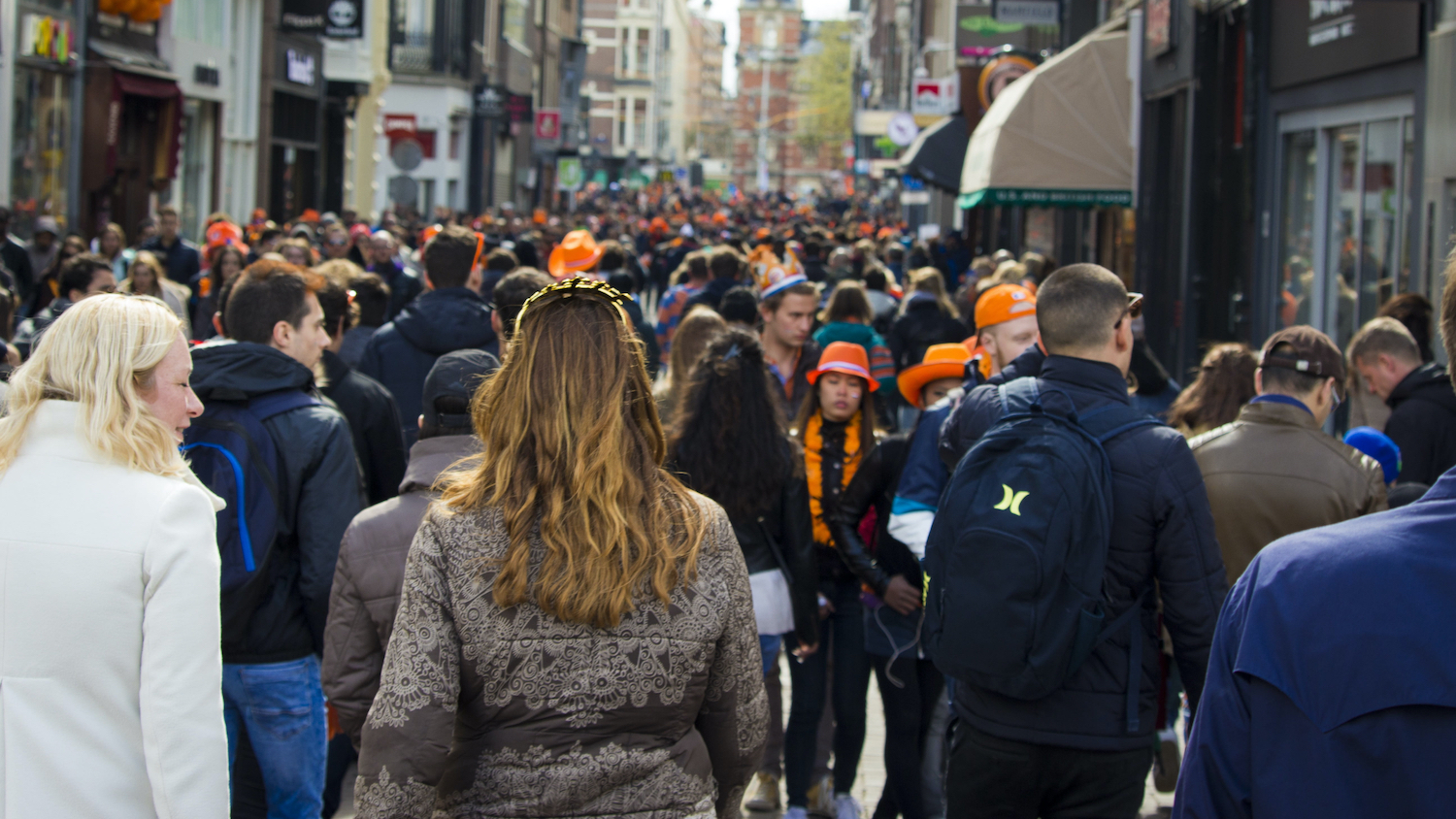
The population of the Netherlands is projected to grow continuously over the next fifty years. Following relatively slow growth this year due to higher mortality and lower numbers of immigrants, population growth is expected to resume in the coming few years. The population is expected to stand at 20 million by the year 2063. This is reported by Statistics Netherlands (CBS) on the basis of the most recent population forecast for the period 2020-2070.
The 18 millionth inhabitant is expected to arrive in 2026; the 19 millionth in 2038. The forecast describes the most likely scenario in population dynamics. It also holds uncertainties, as explained in the last paragraph below.
Population growth halved in 2020
For 2020, population growth is estimated at 63 thousand persons. This is half the number in 2019, when 126 thousand new inhabitants were added. Mortality has been higher in 2020 while migration has decreased.
Migration is expected to increase again in the next few years; this applies to both immigration and emigration. Migration flows have already been more significant over the latter half of the year during the second wave of the coronavirus epidemic than during the first wave early this year. The travel restrictions that are holding back migration at the moment will likely be eased as vaccines are becoming available next year. On the other hand, the rising unemployment rate is expected to curb the growth in labour migration in 2021.
After 2020, mortality is expected to decline due to fewer COVID-19 deaths, resulting from improved treatment methods and vaccinations. However, more deaths may temporarily be recorded due to the postponed care for patients with other complaints. On the other hand, COVID-19 deaths also include relatively many vulnerable people who were otherwise likely to succumb to another disease in the short term.
By 2022, population growth is expected to rise beyond 100 thousand again.
Growth mainly due to migration and increasing lifespan
Over the next few decades, the population is projected to grow as more people immigrate than emigrate and people live longer lives. Although there will also be more births as of 2023, in the long run this will not be sufficient to compensate for the increase in mortality. Based on current insights, between 2040 and 2060 there will be more deaths than births among the population.
One-quarter of the population 65 years or older by 2040
The share of over-65s in the population will rise from 20 percent at the end of 2020 to 25 percent by around 2040. Contributors to this growth are the post-war baby boom and the higher birth rates in the 1960s, combined with the increasing life expectancy. The elderly population is expected to stabilise between 2040 and 2050; by then, smaller cohorts will be turning 65 and many elderly from post-war generations will pass away. The number of elderly is projected to rise again beyond 2050, partly on account of the large generation of millennials turning 65.
The number of 20 to 64-year-olds is expected to increase from the current 10.3 million to 10.4 million by around 2027. It will then decline, followed by another increase to 10.9 million by 2070. Over the next few years, the number of 0 to 19-year-olds is likely to stay around 3.7 million. A subsequent increase is expected to a total of 4.2 million by 2070.
42 percent will have a migration background by 2070
Over the past two decades (late 2000 to late 2020), the population has grown by 1.5 million, of whom 96 percent have a migration background. This is due to immigration, but also births among the first generation of migrants, i.e. the second generation. The population with a native Dutch background has declined since 2015 due to more deaths than births and more emigrants than immigrants among this group.
The population growth in the next few decades will entirely be attributable to people with a migration background, while the number of native Dutch inhabitants is set to decline. As of the end of 2020, 25 percent of the population have a western or non-western migration background. This share is expected to reach 42 percent by 2070. Almost half of all people with a migration background (will) have been born in the Netherlands, both now and in the future, with at least one of the parents born outside the Netherlands.
Comparison with previous forecast
The population forecast is adjusted on an annual basis and incorporates the latest developments and insights. Compared to the forecast made in 2019, most of the adjustments have been made on account of the ongoing coronavirus epidemic. In addition, the number of births will decline in the next few years as more women are postponing motherhood. The estimated annual number of emigrants in the longer term has been adjusted downwards. As a result of these adjustments, the current forecast projects a higher number of inhabitants for the year 2060 than the previous forecast (+279 thousand). An extra article (in Dutch only) focuses on slower population growth due to coronavirus and includes more details on the discrepancy with previous forecasts.
Most likely development and uncertainties
The population forecast aims to describe the most likely future development of the Dutch population. In this forecast, CBS uses a simulation model which uses research assumptions regarding births, deaths, immigration and emigration as the basis for projections.
The forecast figures are subject to uncertainties. For example, the number of migrants can fluctuate sharply from year to year. It is also uncertain whether the average lifespan will continue to rise at the same pace and whether Dutch households will keep their preference for having two children. Moreover, it is highly uncertain whether the coronavirus epidemic will have a long-term impact on population dynamics. In all likelihood, the population will reach between 17.2 and 22.0 million by 2070.
Source: Statistics Netherlands
Holanda: Crescimento populacional inabalável nos próximos 50 anos
A população da Holanda deve crescer continuamente nos próximos cinquenta anos. Após um crescimento relativamente lento este ano devido à maior mortalidade e menor número de imigrantes, o crescimento populacional deve ser retomado nos próximos anos. A população deve chegar a 20 milhões até o ano 2063. Isso é relatado pela Statistics Netherlands (CBS) com base na previsão populacional mais recente para o período 2020-2070.
Espera-se que o número de habitantes chegue a 18 milhões em 2026 e 19 milhões em 2038. A previsão descreve o cenário mais provável na dinâmica populacional. Também guarda incertezas, conforme explicado no último parágrafo.
Crescimento populacional caiu pela metade em 2020
Para 2020, o crescimento populacional está estimado em 63 mil pessoas. Essa é a metade do número de 2019, quando esse número foi de 126 mil novos habitantes. A mortalidade foi maior em 2020, enquanto a migração diminuiu.
A migração deverá aumentar novamente nos próximos anos; isso se aplica tanto à imigração quanto à emigração. Os fluxos migratórios já foram mais significativos na segunda metade do ano durante a segunda onda da epidemia de coronavírus do que durante a primeira onda no início deste ano. As restrições de viagem que estão impedindo a migração no momento provavelmente serão amenizadas, já que as vacinas estarão disponíveis no próximo ano. Por outro lado, o aumento da taxa de desemprego deve conter o crescimento da migração laboral em 2021.
Após 2020, espera-se que a mortalidade diminua devido a menos mortes pela Covid-19, resultantes de métodos de tratamento e vacinações aprimorados. No entanto, mais mortes podem ser registradas temporariamente devido ao atendimento adiado para pacientes com outras queixas. Por outro lado, as mortes pela Covid-19 também incluem relativamente muitas pessoas vulneráveis que, de outra forma, teriam probabilidade de sucumbir a outra doença a curto prazo.
Em 2022, o crescimento populacional deverá passar de 100 mil pessoas novamente.
Crescimento principalmente devido à migração e aumento da expectativa de vida
Ao longo das próximas décadas, a população deve crescer à medida que mais pessoas imigram do que emigram e as pessoas vivem mais. Embora também haja mais nascimentos a partir de 2023, a longo prazo isso não será suficiente para compensar o aumento da mortalidade. Com base nas percepções atuais, entre 2040 e 2060, haverá mais mortes do que nascimentos entre a população.
Um quarto da população com 65 anos ou mais em 2040
A proporção de pessoas com mais de 65 anos na população aumentará de 20 por cento no final de 2020 para 25 por cento por volta de 2040. Os contribuintes para esse crescimento são o baby boom do pós-guerra e as taxas de natalidade mais altas na década de 1960, combinadas com o aumento expectativa de vida. A população idosa deve se estabilizar entre 2040 e 2050; até lá, um número menos de pessoas estará completando 65 anos e muitos idosos das gerações do pós-guerra morrerão. O número de idosos deverá aumentar novamente após 2050, em parte devido à grande geração de millennials que chega aos 65 anos.
Espera-se que o número de 20 a 64 anos aumente dos atuais 10,3 milhões para 10,4 milhões em cerca de 2027. Em seguida, diminuirá, seguido por outro aumento para 10,9 milhões em 2070. Nos próximos anos, o número de jovens de 0 a 19 anos provavelmente ficará em torno de 3,7 milhões. Um aumento subsequente é esperado para um total de 4,2 milhões até 2070.
42 por cento terão um histórico de migração em 2070
Nas últimas duas décadas (final de 2000 ao final de 2020), a população cresceu 1,5 milhão, dos quais 96% têm histórico de migração. Isso se deve à imigração, mas também aos nascimentos entre a primeira geração de migrantes, ou seja, a segunda geração. A população de origem holandesa nativa diminuiu desde 2015 devido a mais mortes do que nascimentos e mais emigrantes do que imigrantes neste grupo.
O crescimento populacional nas próximas décadas será inteiramente atribuível a pessoas com antecedentes de migração, enquanto o número de habitantes holandeses nativos tende a diminuir. No final de 2020, 25% da população tinha uma origem migratória ocidental ou não ocidental. Espera-se que essa participação chegue a 42% em 2070. Quase metade de todas as pessoas com histórico de migração terá nascido na Holanda, tanto agora como no futuro, com pelo menos um dos pais nascido fora da Holanda.
Comparação com previsão anterior
A previsão da população é ajustada anualmente e incorpora os desenvolvimentos e percepções mais recentes. Em relação à previsão feita em 2019, a maior parte dos ajustes foi feita por conta da epidemia de coronavírus em curso. Além disso, o número de nascimentos diminuirá nos próximos anos, à medida que mais mulheres adiam a maternidade. O número anual estimado de emigrantes no longo prazo foi ajustado para baixo. Como resultado destes ajustes, a previsão atual projeta um número de habitantes superior para o ano de 2060 do que a previsão anterior (+279 mil). Um artigo extra (em holandês) concentra-se no crescimento mais lento da população devido ao coronavírus e inclui mais detalhes sobre a discrepância com as previsões anteriores.
Desenvolvimento mais provável e incertezas
A previsão da população visa descrever o desenvolvimento futuro mais provável da população holandesa. Nesta previsão, o CBS usa um modelo de simulação que usa suposições de pesquisa sobre nascimentos, mortes, imigração e emigração como base para as projeções.
Os números da previsão estão sujeitos a incertezas. Por exemplo, o número de migrantes pode flutuar acentuadamente de ano para ano. Também é incerto se a expectativa de vida média continuará a aumentar no mesmo ritmo e se as famílias holandesas manterão sua preferência por ter dois filhos. Além disso, é altamente incerto se a epidemia de coronavírus terá um impacto de longo prazo na dinâmica populacional. Provavelmente, a população atingirá entre 17,2 e 22,0 milhões em 2070.
Fonte: Statistics Netherlands


