


A pilot program by the National Industrial Learning Service (SENAI) with 43 companies from 24 Brazilian states showed that Industry 4.0’s new digital technologies increase the productivity of micro, small and medium enterprises by 22%. Called “Indústria Mais Avançada”, the project is the first to test the impact on production of the use of low-cost tools such as sensing, cloud computing and IoT.
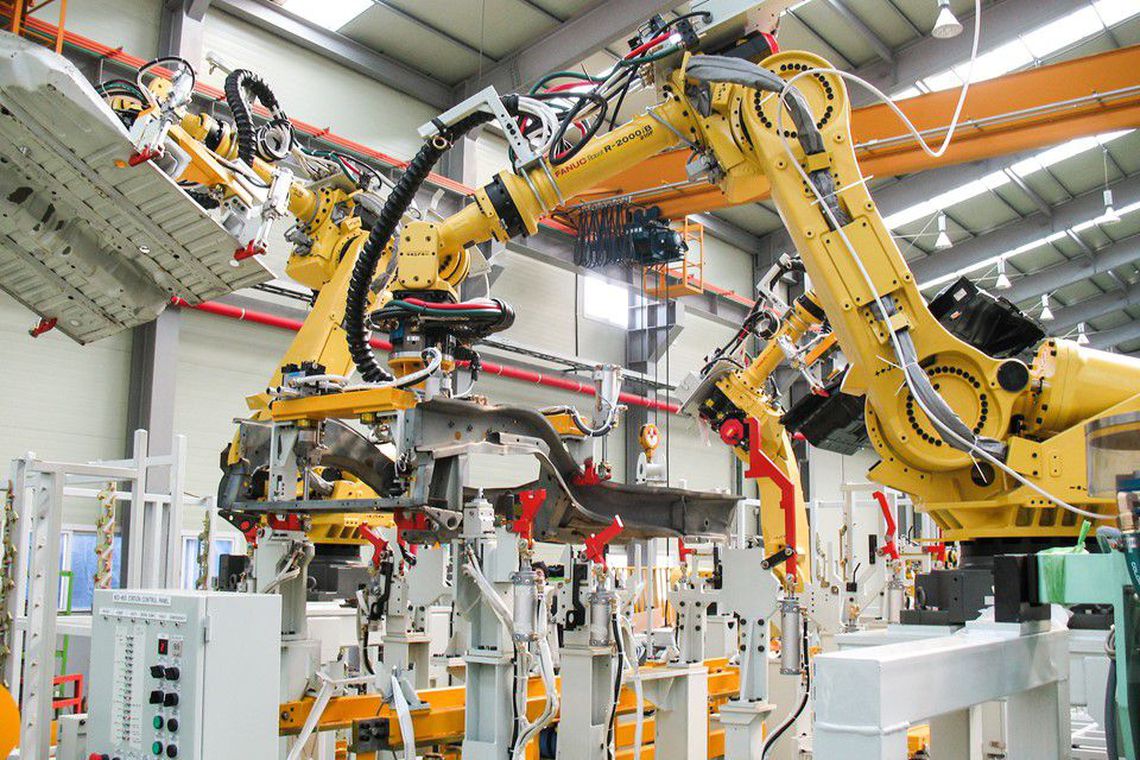
Industry 4.0 is a recent term that explains the application of new technologies in major industrial processes. Among the most striking features are task automation and data and information control. The emergence and use of these tools is being classified as the fourth industrial revolution, due to the possibility of a deeper impact and to be characterized by a set of technologies that allow the fusion of the physical, digital and biological world.
Among the tools used are 3D Printing (adding material to make objects, consisting of several parts, constituting an assembly); Artificial Intelligence (seeks to simulate the human capacity to reason, make decisions, solve problems, providing software and robots with the ability to automate various processes); Internet of Things (possibility that physical objects are connected to the Internet and can coordinate a certain action).
There is also Synthetic Biology (convergence of new technological developments in the areas of chemistry, biology, computer science and engineering, allowing the design and construction of new biological parts); and Cyber-Physical Systems (synthesize the fusion between the physical and digital world, with every physical object and the physical processes that occur, due to this object, digitized).
“Senai’s goal with the pilot experience, called Indústria Mais Avançada, is to refine a low-cost, high-impact, fast-implementation method that will help Brazilian companies fit into the 4th Industrial Revolution. Senai’s initiative proves that Indústria 4.0 is for everyone: any type of company, in any state of Brazil. The national result is relevant, and, especially, there were significant gains for all the companies served,” said Senai CEO Rafael Lucchesi.
According to Senai, the pilots were held between May 2018 and October this year, in companies in the food and beverage, metalworking, furniture, clothing and footwear segments. Sensors were installed to collect data, and the information was transmitted to a platform that monitors the performance of the production line in real time, allowing for better control of process indicators and anticipating possible problems.
“The companies that made the most gains from digital technologies were those that used the least production management techniques before participating in the program. The new technique, when introduced in a company that uses few management methods, provides greater productivity gains,” said Senai Executive Innovation and Technology Manager Marcelo Prim.
According to Senai, the analysis also showed that the perception of the gain obtained with the technology is greatly affected by the size of the company. Medium and large companies tend to invest in Industry 4.0 technologies to continue their efforts to increase productivity. Micro and small entrepreneurs value more the agility allowed by the system.
“The system allows us to learn from the production process, reducing response time, making it more agile and predictable. Ensuring that what the entrepreneur planned will be delivered on time to match the market brings a higher level of competitiveness for the small business, and it can more easily fit into the value chains, ”Prim explained.
Recommendations for joining industry 4.0 include streamlining processes, qualifying workers, employing affordable and affordable technologies, investing in research.
Source: Agência Brasil
Novas tecnologias digitais aumentam produtividade de empresas


