


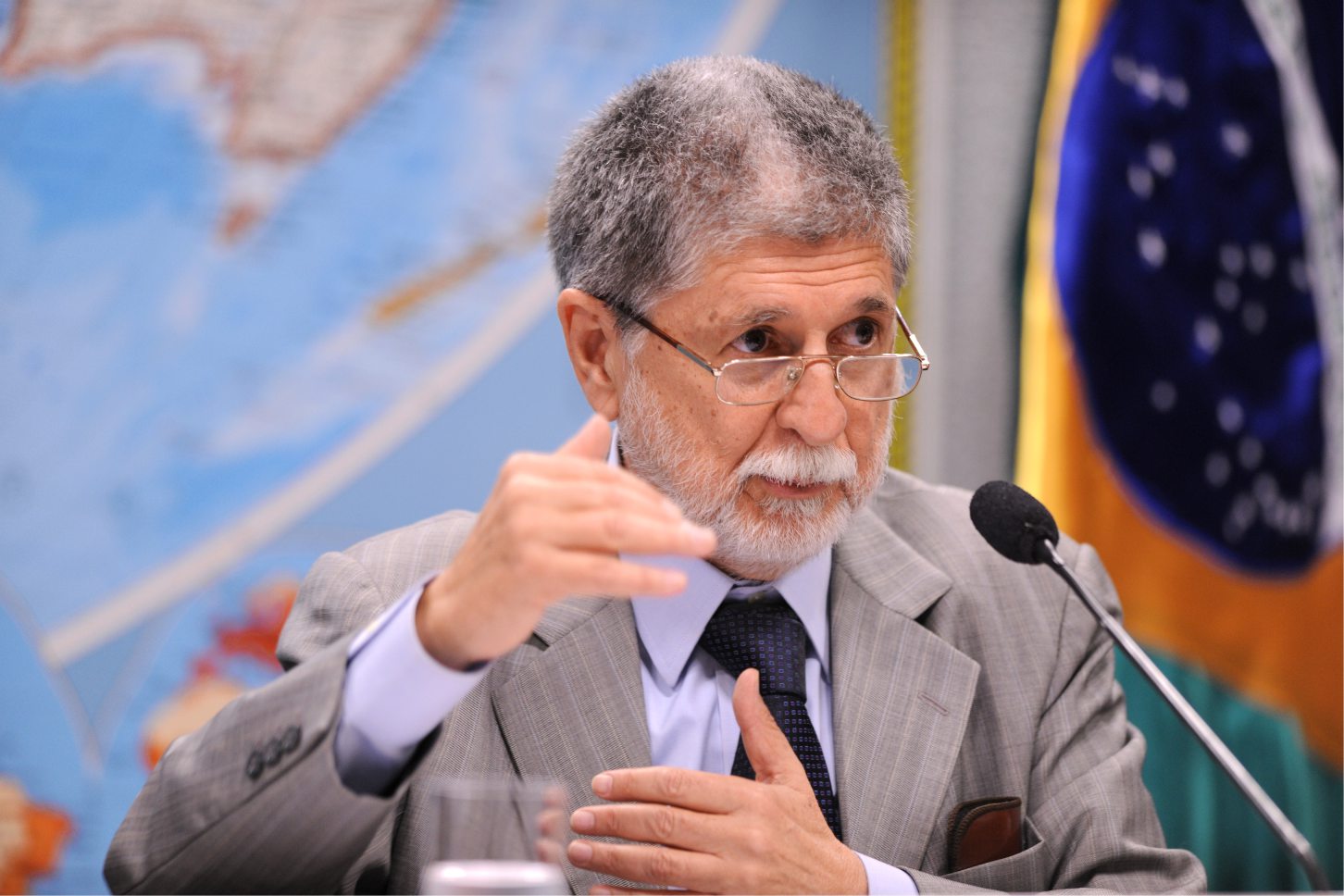
FGV’s International Intelligence Unit (NPII) promoted the lecture series “Tehran, Ramallah and Doha – Memories of the Active and Generous Foreign Policy”, led by former minister Celso Amorim. The event, which took place in september 2015, addressed three cases narrated by the speaker in a book released this year, with one common subject: the development of an active and generous foreign policy, consistent with the international role of Brazil.
The first meeting discussed the topic “The Declaration of Tehran: A Lost Opportunity?” and the effective participation of Brazil in the negotiation between the US and Iran to close the nuclear fuel exchange agreement between 2009 and 2010. At the time, despite the efforts made by Brazil and Turkey that led to the acceptance of the agreement by Iran, its provisions were not implemented because the US kept the sanctions previously imposed on the country. “We gradually moved away from the process because it no longer made any sense to continue”, said the minister.
The two countries have recently closed a nuclear agreement. When asked if there is any resentment left, Celso Amorim replied, “none”. “I particularly applaud the agreement because of its importance. However, I always call attention to two points. First, the parties involved wasted time. Although the agreements are different, the current one would have been closed much faster if Tehran’s declaration had been accepted. Secondly, it would have had a much better basis, since at that time Iran owned 2,000 kg of enriched uranium and today it owns 10,000 kg”, he said.
The second lecture specifically addressed the Brazilian rapprochement policy to Arab countries of the Middle East and Israel. “In common to what has been discussed in the last meeting, Brazil tried to reach the so-called ‘great game of international politics’”, he said. Celso Amorim highlighted Brazil’s participation as an elected member of the UN Security Council from 1998 to 1999, and the creation of panels on Iraq, chaired by Brazil, and the founding of the Summit of South American-Arab Countries (ASPA) with the idea of institutionalizing the relationship between the two parties. “The emergence of the ASPA was also a learning process and it is important that this learning process becomes not only personal, but also institutional.”
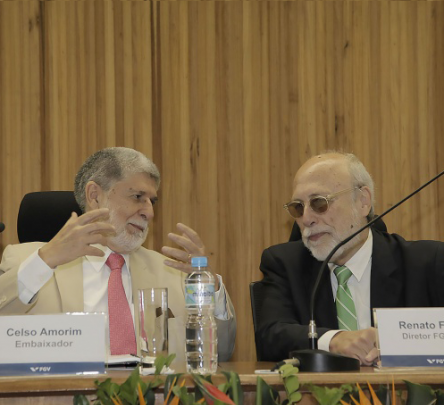
“The Middle East is and has been a major conflict area in the past 50 years with a potential to become an even wider conflict; therefore, it is important for Brazil to play a greater role in this scenario somehow. Along with all this, there are interests of commercial, cultural, technical and scientific nature and a very large Arab representation in the Brazilian population. These factors led to the decision of reaching out to Arab countries”, noted the diplomat. With respect to Israel, Celso Amorim believes that, although the Brazilian media says that the ASPA was an insult to the country, the rapprochement was even greater due to the trust in Brazil, resulting in a reflection on trade relations. “The first Mercosur agreement outside the region was with Israel.”
To end the Lecture Series, in the third meeting Celso Amorim spoke about the complex and delicate negotiations of the Doha Round in the World Trade Organization (WTO), which aim to lower trade barriers around the world, focusing on free trade for developing countries. Specifically, he spoke about developments in the Uruguay Round and the so-called “The Millennium Round” and the important role Brazil played in the negotiations, especially those concerning agriculture.
source: FVG Notícias


